
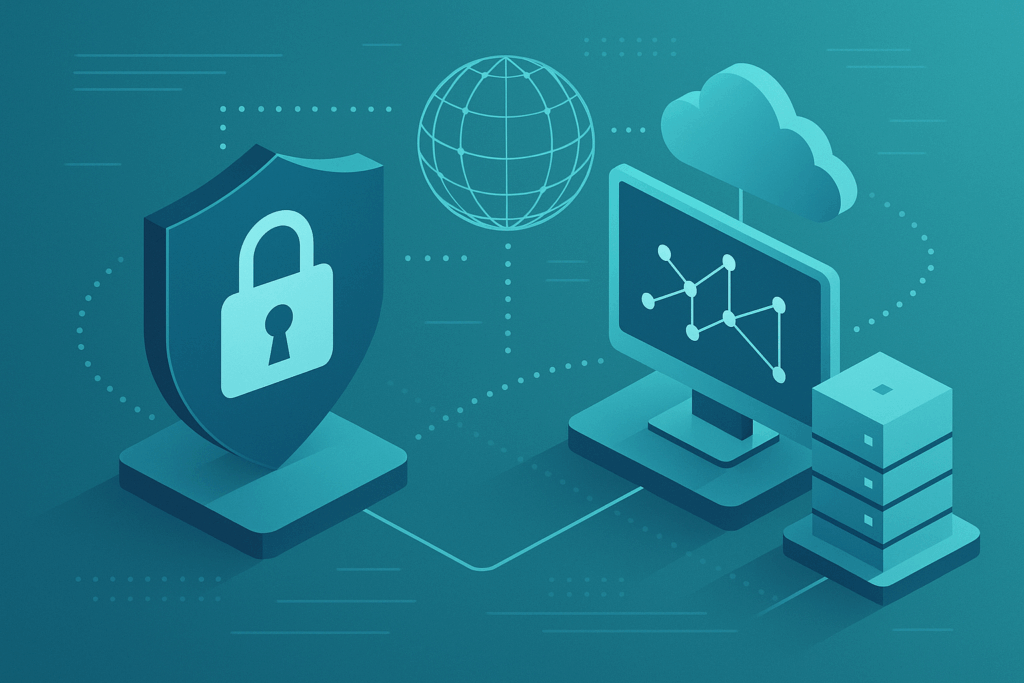
Why Zero Trust Needs Digital Twins

Zero Trust Digital Twin Architecture

Federal agencies are operating in an increasingly hostile cyber landscape. Attackers are faster, more adaptive, and often automated, leaving traditional perimeter-based defenses insufficient for today’s distributed and hybrid government environments. While zero trust has emerged as the primary federal strategy for modern cybersecurity, implementing it effectively and operationalizing it across complex infrastructures remains a major challenge. Digital twins are beginning to change that. By providing a virtual, real-time replica of agency networks, systems, and applications, digital twins give federal teams the opportunity to test, validate, and strengthen zero-trust strategies long before a real-world adversary strikes.

Zero Trust Needs a Testing and Validation Environment

A digital twin provides exactly that environment. Instead of relying on traditional physical labs that are expensive to maintain and rarely mirror production accurately, agencies can leverage digital twins to replicate their mission environments with far greater precision. This creates a safe, cost-effective space where teams can run simulations, test segmentation policies, model identity behavior, and validate zero trust controls at scale. Rather than reacting during an incident, agencies can learn proactively, rehearsing their defenses and identifying vulnerabilities before adversaries exploit them.

Digital twins also enable agencies to perform controlled simulations of ransomware attacks, insider threats, supply-chain compromises, and lateral movement paths, scenarios that are difficult and risky to test in production environments. For organizations navigating legacy integrations, hybrid cloud architectures, and modernization initiatives, digital twins become a critical mechanism for anticipating compromise and refining disaster recovery and continuity strategies.

Operational Benefits of Pairing Zero Trust With Digital Twins

A growing number of agencies are discovering that digital twins are not just a supporting technology; they are a force multiplier for operational resilience.

Replacing Outdated Physical Test Labs

Many agency labs lag behind production environments and require constant manual updates. Digital twins address this by creating an always-current model that evolves in sync with live systems. Teams gain the ability to test updates, policy changes, and configuration shifts quickly and confidently.

Enhancing “Assume Breach” Planning

Zero trust assumes breaches will occur. Digital twins allow agencies to explore how adversaries might move, where segmentation breaks down, and what visibility gaps exist, without exposing mission systems to risk. Agencies can model their containment strategies and validate that zero trust controls perform as expected.

Providing Measurable Zero Trust ROI

One of the biggest challenges in cybersecurity is proving value. When agencies use digital twins to visualize attack path reductions, validate control effectiveness, and quantify improvements in their security posture, zero trust becomes measurable and defensible, especially when budget constraints and oversight demands are high.

Supporting Tool Consolidation and Architecture Simplification

Tool sprawl undermines many zero-trust efforts. Digital twins give agencies a unified view of capabilities across their environment, making it easier to identify redundant tools, streamline vendor portfolios, and maintain security without unnecessary complexity.

Zero Trust Success Requires People, Process, and Tools Working Together

While digital twins introduce new technical capabilities, sustainable zero-trust transformation depends on cultural and operational alignment. Agencies must foster a shared understanding of why zero trust matters and how it strengthens mission resilience. This starts with clear communication about goals, timelines, and outcomes. Resistance often stems from misalignment, not technology.

Building Cross-Team Support Through Clear Communication

Teams need to understand how zero trust improves their workflows, enhances mission continuity, and reduces overall operational risk. When the “why” becomes clear, adoption accelerates across technical and non-technical stakeholders.

Shifting From Prevention to Damage Limitation

Zero trust recognizes that the adversary will eventually break through. High-performing agencies are developing detailed incident response plans, assigning clear responsibilities, and practicing their response regularly. Many adopt a 90/10 planning-to-execution ratio, understanding that thorough planning significantly increases the likelihood of success. Digital twins amplify this preparation by offering a realistic, controlled environment for exercises and refinement.

Modernizing Federal Security Tooling With Confidence

Digital twins enable agencies to experiment with configurations, test new tools, and validate architectural changes before deployment. This reduces risk, accelerates modernization, and ensures that updates strengthen the agency’s security posture.

Why Digital Twins Are Becoming Essential for Federal Cyber Resilience

The future of federal cybersecurity is increasingly centered on continuous adaptation. Zero trust provides the policy and architectural framework for resilience, but digital twins operationalize that framework by offering a dynamic space for testing, rehearsal, and validation. Together, they allow agencies to keep pace with sophisticated threats, strengthen continuity strategies, and build confidence in every modernization decision.

Agencies that invest in digital twins gain a real advantage: the ability to anticipate compromise, contain incidents rapidly, and evolve their defenses at the speed of threat actors. 

If your agency is ready to operationalize zero trust, evaluate digital-twin capabilities, or modernize your cyber architecture with clarity and confidence, Veritech can help. Our engineers work side-by-side with federal teams to design resilient architectures, build secure test environments, streamline modernization, and ensure every control is validated before it ever touches production.

Let’s talk about how we can support your mission. Contact our team to begin a conversation about strengthening your cyber posture and building the operational resilience your agency needs.

VeriTech Services

True Tech Advisors – Simple solutions to complex problems. Helping businesses identify and use new and emerging technologies.

Greg Bew

CEO

CEO | Data Architecture & AI Strategy Leader | Cyber Operations & Decision Advantage Expert

Greg Bew is a technology and transformation leader with deep expertise in data architecture, cyber operations, and large-scale enterprise modernization. With over two decades of experience spanning military service and industry, Greg has led the design and implementation of mission-critical data platforms, advanced analytics capabilities, and AI-driven decision systems supporting national security and defense operations.

A retired U.S. Army Lieutenant Colonel, Greg served in key leadership roles across cyber and intelligence organizations, culminating as a Senior Advisor to the Commander of DoD Cyber Defense Command and the Director of DISA for Data, Analytics, and AI. In these roles, he helped shape the Joint Cyber Warfighting Architecture (JCWA), driving the transition toward data-centric operations and enabling decision advantage across distributed, contested environments.

As the Founder & CEO of Veritech Consulting, Greg applies this experience to help government and enterprise organizations design and operationalize modern data architectures. His work focuses on integrating cloud, AI/ML, and distributed data systems into cohesive, mission-aligned platforms that prioritize governance, scalability, and real-world operational impact.

Key Expertise & Accomplishments:

Data Architecture & Platform Engineering – Designed and led enterprise-scale data platforms enabling distributed analytics, AI integration, and real-time decision support across multi-domain environments.

Cyber Operations & Intelligence Integration – Extensive experience aligning data, analytics, and operational workflows to support cyber defense, intelligence fusion, and mission execution.

AI & Advanced Analytics Enablement – Spearheaded initiatives to operationalize AI/ML within secure environments, integrating model deployment, governance, and data pipelines at scale.

Strategic Leadership & Advisory – Served as a senior advisor to three-star leadership, shaping enterprise data strategy, governance models, and cross-organizational integration efforts.

Cloud & Distributed Systems Modernization – Led transitions from legacy architectures to cloud-native and federated data environments, emphasizing resilience, sovereignty, and performance.

Career Highlights:

🔹 Senior Advisor, DoD Cyber Defense Command & DISA – Guided enterprise data and AI strategy supporting the Joint Cyber Warfighting Architecture and global cyber operations.

🔹 Senior Principal Data Platform Engineer, Leidos – Delivered advanced data solutions and modernization strategies across defense and federal customers.

🔹 U.S. Army Lieutenant Colonel (Retired) – Led cyber, intelligence, and data-focused units, driving innovation in operational analytics and mission systems.

Thought Leadership & Innovation:

📘 Author of Sky Computing: The Architecture of Data Sovereignty, introducing a new model for governing data, authority, and computation in distributed environments.

🚀 Creator of frameworks and platforms focused on data sovereignty, federated control, and AI-enabled decision advantage.

📊 Advocate for data-centric operations, emphasizing the alignment of technology, governance, and mission outcomes.


Greg Bew continues to lead Veritech Consulting with a focus on delivering practical, high-impact solutions that help organizations navigate complex technology landscapes and achieve decisive advantage through data.

Liana Pannell

Director of Operations

Liana is a process-driven operations leader with nine years of experience in project management, technology program management, and business operations. She specializes in developing, scaling, and codifying workflows that drive efficiency, improve collaboration, and support long-term growth. Her expertise spans edtech, digital marketing solutions, and technology-driven initiatives, where she has played a key role in optimizing organizational processes and ensuring seamless execution.

With a keen eye for scalability and documentation, Liana has led initiatives that transform complex workflows into structured, repeatable, and efficient systems. She is passionate about creating well-documented frameworks that empower teams to work smarter, not harder—ensuring that operations run smoothly, even in fast-evolving environments.

Liana holds a Master of Science in Organizational Leadership with concentrations in Technology Management and Project Management from the University of Denver, as well as a Bachelor of Science from the United States Military Academy. Her strategic mindset and ability to bridge technology, operations, and leadership make her a driving force in operational excellence at VeriTech Consulting.

Keri Fischer

COO & Founder

Founder & COO | Cybersecurity & Data Analytics Expert | SIGINT & OSINT Specialist

Keri Fischer is a highly accomplished cybersecurity, data science, and intelligence expert with over 20 years of experience in Signals Intelligence (SIGINT), Open Source Intelligence (OSINT), and cyberspace operations. A proven leader and strategist, Keri has played a pivotal role in advancing big data analytics, cyber defense, and intelligence integration within the U.S. Army Cyber Command (ARCYBER) and beyond.

As the Founder & COO of VeriTech Consulting, Keri leverages extensive expertise in cloud computing, data analytics, DevOps, and secure cyber solutions to provide mission-critical guidance to government and defense organizations. She is also the Co-Founder of Code of Entry, a company dedicated to innovation in cybersecurity and intelligence.

Key Expertise & Accomplishments:

Cyber & Intelligence Leadership – Served as a Senior Technician at ARCYBER’s Technical Warfare Center, providing SME support on big data, OSINT, and SIGINT policies and TTPs, shaping future Army cyber operations.
Big Data & Advanced Analytics – Spearheaded ARCYBER’s Big Data Platform, enhancing cyber operations and intelligence fusion through cutting-edge data analytics.
Cybersecurity & Risk Mitigation – Excelled in identifying, assessing, and mitigating security vulnerabilities, ensuring mission-critical systems remain secure, scalable, and resilient.
Strategic Operations & Decision Support – Provided key intelligence support to Joint Force Headquarters-Cyber (JFHQ-C), Army Cyber Operations and Integration Center, and Theater Cyber Centers.
Education & Innovation – The first-ever 170A to graduate from George Mason University’s Data Analytics Engineering Master’s program, setting a new standard for data-driven military cyber operations.

Career Highlights:

🔹 Senior Data Scientist – Led groundbreaking all domain efforts in analytics, machine learning, and data-driven operational solutions.
🔹 Senior Technician, U.S. Army Cyber Command (ARCYBER) – Recognized as the #1 warrant officer in the command, driving big data analytics and cyber intelligence strategies.
🔹 Division Chief, G2 Single Source Element, ARCYBER – Directed 20+ analysts in SIGINT, OSINT, and cyber intelligence, influencing Army cyber policies and operational training.
🔹 Senior Intelligence Analyst, ARCYBER – Built the Army’s first OSINT training program, improving intelligence support for cyberspace operations.

Recognition & Leadership:

🛡️ Lauded as “the foremost expert in data analytics in the Army” by senior leadership.
📌 Key advisor to the ARCYBER Commanding General on all data science matters.
🚀 Led the development of ARCYBER’s first-ever OSINT program and cyber intelligence initiatives.

Keri Fischer is a visionary in cybersecurity, intelligence, and data science, continuously pushing the boundaries of technological innovation in defense and national security. Through her leadership at VeriTech Consulting, she remains dedicated to helping organizations navigate the complexities of emerging technologies and drive mission success in an evolving cyber landscape.

Education:

National Intelligence University Graphic

National Intelligence University

Master of Science – MS Strategic Intelligence

 – 

George Mason University Graphic

George Mason University

Master of Science – MS Data Analytics

 –